Interview questions by topic
Failure and mistakes interview questions, with sample answers

IraAI writerAI interviewing editor
Published by the Itya team · Updated
7 questions · strong and weak answers in candidates' words · anchored 1-to-5 scale
Answers from Amara, Rajat and Sarah, three illustrative candidatesWhat interviewers listen for
- A real failure, with a cost. Something that went wrong because of what the candidate did or didn't do. Not a strength in disguise, and not a story where someone else let them down.
- When they noticed, and how soon they said so. Strong candidates name the early warning sign and tell the people affected before anyone asks.
- 'I', not 'we' or 'the system'. Their own part, stated plainly, without deflecting and without a long show of guilt.
- The repair, then the cause. What they did to limit the damage, and what they changed so it would not happen again.
- A change they still use. A habit, a check or a rule from the failure that shows up in how they work today.
Meet the candidates
Three candidates from different jobs answer the questions below. Each is strong on some and thin on others, the way real candidates are, so you hear both kinds of answer side by side.
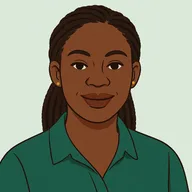
Amara Okeke
Data analyst, consumer lending · 5 years · Lagos
Builds the risk and collections dashboards for a digital lender. Quick to own and correct her own errors, in public if she has to; finds it harder to let go of a project she believes in.

Rajat Khanna
Finance manager · 12 years · Gurugram
Runs month-end close, vendor payments and tax filings for a chain of diagnostic labs. Builds solid checks after anything goes wrong; tends to explain a setback away when it was his own judgment call.

Sarah Mitchell
Marketing manager, B2B software · 9 years · Denver
Runs demand generation for a payroll software company. Candid about campaigns that flopped and what they taught her; less careful with small slips, and quick to blame the handoffs around her.
Illustrative people. The names are invented, the portraits are AI-generated, and their words were written by our AI writers to show what candidates sound like. Any resemblance to a real person is a coincidence.
The questions
Tell me about a time you failed at something that mattered at work. What happened, and what did you do next?
Whether the candidate can name a real failure of their own, owns their part in it, and shows what they changed afterwards.
Follow up with
- What was your part in it, specifically?
- When did you first realize it was going wrong?
- What do you do differently now, and when did you last do it?
Sarah MitchellMarketing manager, B2B software · 9 years · Denver“I ran the launch campaign for a new expense module. I'd told my VP we'd get 400 trial sign-ups from a webinar and three weeks of emails. We got 90. The warning was there in week one: people opened the emails, but almost nobody clicked, and I told myself the webinar would fix it. It didn't. Before the quarter closed, I took my VP the numbers and my read on what went wrong: I'd written everything around features, and our buyers, payroll heads, cared about audit risk. We rebuilt the second wave around that, and it did about three times better. Now every campaign gets a one-week checkpoint with a number that, if we miss it, means we change the plan instead of waiting.”
What makes it strong
Picks a failure with real consequences, says plainly what they did or failed to do, describes when they noticed and how they limited the damage, and names a change in how they work that they have used since.
Rajat KhannaFinance manager · 12 years · Gurugram“Honestly, my biggest failure is probably that I take too much on myself. I'm a bit of a perfectionist, so I find it hard to delegate, and I end up reviewing everything my team does. They've told me so, and I'm working on it.”
What gives it away
Offers a strength in disguise ('I'm a perfectionist'), a failure caused entirely by others, or a story with no consequence. Cannot say what they would do differently.
Tell me about a mistake you made that reached a customer, a client or someone outside your team.
Whether the candidate tells the people affected promptly and honestly, repairs the immediate harm, and then fixes the cause.
Follow up with
- How did they find out: from you, or some other way?
- What exactly did you say to them?
- What did you change so it would not happen again?
Rajat KhannaFinance manager · 12 years · Gurugram“In my second month in this job, we paid forty-two vendors twice in one run, about eighteen lakh rupees. I had approved it. The bank file had been generated twice after a timeout, and I signed off without matching its total to the approved list. A vendor called the next morning. I told the CFO within the hour, then called the eight biggest vendors myself that day, explained what had happened, and agreed with each whether to refund or adjust their next invoice. The rest got a letter that week. We recovered all of it in five weeks. Now no run is released until the file total matches the approved list, and anything over five lakh needs a second approver.”
What makes it strong
Describes the error and its effect on the people outside the team, how quickly they told them and what they said, how they repaired the immediate harm, and the check or change that stops it recurring. Says 'I approved it', not 'the system did it'.
Sarah MitchellMarketing manager, B2B software · 9 years · Denver“Once I sent a campaign email to the wrong list, so about two thousand existing customers got a "start your free trial" offer. A few of them replied asking what it meant. We didn't make a big thing of it; the next email went out as normal, and I don't think most people noticed.”
What gives it away
Fixed it quietly and hoped nobody noticed, waited for the customer to complain, or blames a tool or a colleague. The cause was never addressed.
Tell me about a deadline you missed. When did you tell people?
Whether the candidate sees a slip coming and warns the people depending on them early, or lets the deadline arrive and pass in silence.
Follow up with
- When did you first know you might miss it?
- Who did you tell, and what did you offer them?
- Why was your original estimate wrong?
Amara OkekeData analyst, consumer lending · 5 years · Lagos“Our head of credit needed a new collections dashboard for a board meeting on the 30th. Ten days out, I found that repayments for our second loan product came from a different system and didn't match the first; joining them properly would take a week on its own. That afternoon I gave her two options: everything on the 5th, or the first product only, fully checked, by the 28th. She took the partial version, the board saw correct numbers, and the rest went live on the 4th. My estimate was wrong because I'd given a date before looking at the second system's data. Now I spend a day with the raw data before I commit to anything.”
What makes it strong
Says when they first saw the risk, warned the people depending on them early with a new date and options, such as a smaller first version, and explains honestly why their estimate was wrong.
Sarah MitchellMarketing manager, B2B software · 9 years · Denver“We were supposed to launch a partner campaign by the end of the quarter, and it slipped about three weeks. Design was stretched across two launches, and legal took forever to approve the copy. That's marketing, honestly: there are a lot of handoffs you don't control. It went out in the end and did fine.”
What gives it away
Raised it on the day or after, blames the scope or other teams, or claims never to have missed a deadline.
You find an error in a report you sent to senior leaders last week. Nobody has noticed. What do you do?
Whether the candidate corrects their own mistake unprompted, judges its impact, and owns it without either hiding it or making a drama of it.
Follow up with
- Who do you tell first, and how?
- Does it change anything if the error is small?
- What if a decision has already been made on the wrong number?
Amara OkekeData analyst, consumer lending · 5 years · Lagos“First I'd work out what the error actually changes. Say I'd double-counted restructured loans, so the default rate I reported was 4.1 percent when it was really 3.6. I'd check whether anyone had already acted on it. Then I'd write to the same people that day, not wait for next week's report: "I made an error in last week's report. The default rate was 3.6 percent, not 4.1. Here's the corrected version and what it changes." One line owning it, no long apology. If a decision had already been made on the wrong number, I'd call the person who made it before sending the email. Then I'd work out how it got past my checks, and add one.”
What makes it strong
Works out how big the error is and which decisions it touched, tells the people who received it promptly with the corrected figure, owns it in a sentence rather than a long apology, calls anyone who already acted on it, and finds out how it slipped through.
Rajat KhannaFinance manager · 12 years · Gurugram“It depends on materiality. If the difference is small and doesn't change any decision, I'd correct it in next month's pack rather than send a correction to the leadership group. Too many corrections and people stop trusting the numbers. If it were material, of course I'd tell my CFO.”
What gives it away
Waits to see if anyone notices, quietly corrects it in the next version, or acts only if the error is large. Spends more time on why it happened than on putting it right.
Tell me about something you kept working on for too long after it had stopped working. What finally made you stop?
Whether the candidate notices when an effort is failing and stops on evidence, rather than defending what they have already put into it.
Follow up with
- Looking back, what were the early signs?
- Who saw it before you did?
- How do you decide now when to stop something?
Sarah MitchellMarketing manager, B2B software · 9 years · Denver“We ran a monthly podcast for HR leaders for fourteen months. I loved it, but by month six it was clear the listeners weren't our buyers: almost none of our pipeline had touched it, and each episode took a week of my team's time. I kept it going because I'd pitched it to leadership, and stopping felt like admitting I was wrong. What finally did it was a new hire asking in planning what the podcast was for. I couldn't answer with a number. I wound it down over two episodes, turned the best interviews into blog posts, and moved that time into customer case studies, which sales actually used. Now anything new I start gets a review date and a target on day one.”
What makes it strong
Names the signs they ignored and why, what made them face it, how they stopped cleanly (told people, kept what was useful, moved the effort elsewhere), and the stopping rule they use now.
Amara OkekeData analyst, consumer lending · 5 years · Lagos“I spent about four months building a model to predict which borrowers would miss their first repayment. The accuracy kept improving every few weeks, so stopping felt wrong. Then the credit team changed priorities and it was shelved. Honestly, I still think it was close; another month and it would have been ready.”
What gives it away
Still believes it was about to work, blames others for pulling the plug, or can't name the point at which it should have stopped.
A colleague tells you they've made a mistake that will cost a customer money, and asks you to keep it between the two of you. What do you do?
Whether the candidate balances loyalty to a colleague with honesty to the customer, and helps make a mistake safe to own.
Follow up with
- What would you say to them, word for word?
- What if the colleague is senior to you?
- How do you make it easier for people around you to admit mistakes?
Rajat KhannaFinance manager · 12 years · Gurugram“I'd thank them for telling me, because that's the hard part. Then I'd be straight: I can't keep it between us, because the customer will find out, and it's far worse if they hear it from someone else. I'd offer to help them work out the size of it and go with them to our manager that day, so they walk in with a number and a plan, not just a confession. When I approved that double payment to forty-two vendors, my CFO's first question was what we were doing about it, not whose fault it was. I try to be that person. If they still refused, I'd tell them I'd raise it myself by the end of the day, and then I would.”
What makes it strong
Recognizes that telling them took courage, explains why it can't stay hidden, offers to help size the problem and to go with them to raise it, gives them a short window to do it themselves, and raises it if they won't.
Amara OkekeData analyst, consumer lending · 5 years · Lagos“I'd tell them I can't do that, and let our manager know straight away. If it affects a customer, it's not my call to keep it quiet, and I wouldn't want to be blamed later for covering it up.”
What gives it away
Agrees to keep it quiet, or reports it over the colleague's head without giving them the chance to come forward. Focuses on blame or on protecting themselves, not on putting things right.
Tell me about a decision you made that turned out to be wrong. Was it a bad decision, or bad luck?
Whether the candidate judges their own decisions by what they knew at the time, rather than by the outcome alone.
Follow up with
- What did you know when you decided, and what did you find out later?
- What would you need to see to make the same call again?
- What do you check now before a similar decision?
Sarah MitchellMarketing manager, B2B software · 9 years · Denver“Two years ago I moved most of our trade-show budget into paid social, because the shows were expensive and hard to measure. Over the next two quarters, pipeline from mid-sized companies fell by about a quarter. It would be easy to blame the market, but the decision was wrong on information I already had. Sales had told me payroll heads at those companies bought from people they'd met in person, and I discounted it because it wasn't in our attribution data. Bad luck would have been a show getting canceled. This was me trusting what I could measure over what I couldn't. We brought back two regional shows, and now, before I cut anything, I ask sales what we'd lose.”
What makes it strong
Separates what they knew at the time from what they learned later, judges honestly whether the reasoning was sound, names the information they gave too little weight, and describes how they decide differently now.
Rajat KhannaFinance manager · 12 years · Gurugram“We moved our vendor payments to a new bank for a lower fee, and their system had outages in the first three months, so some payments went out late. That was bad luck, really. On paper it was the right decision, the saving was real, and you can't predict a bank's IT problems.”
What gives it away
Calls every bad outcome bad luck, or blames themselves for something they could not have known. Cannot say what they knew when they decided.
Rating the answers
Rate straight after the interview, alone, against these anchors, and write down the line the candidate said that earned the score.
| Rating | What it looks like |
|---|---|
| 5 · Strong | Names a failure with real stakes and their own part in it, saw it early and told the people affected, limited the damage, fixed the cause, and describes a change they have used since. |
| 3 · Mixed | Describes a real mistake and owns it, with a sensible fix. The early warning signs, the effect on others or a lasting change in how they work stays thin until prompted. |
| 1 · Weak | Has no failure to describe, offers a strength in disguise, or tells a story where others were to blame. Hid or delayed the problem, and cannot say what they would do differently. |
If you are the candidate
- Pick a real failure with a real cost, where your own part is clear. A missed deadline or an error that reached a customer works better than a polished weakness.
- Spend a third of your answer on what went wrong and two thirds on what you did about it: who you told, how you fixed it, and what you changed.
- Say 'I'. If others played a part, mention it once and move on; the interviewer is listening for what you own.
- End with something you still do differently, and give an example of when you last did it.
- Freshers: a project that failed, a missed submission, a placement test that went badly or a college event that flopped all count. Choose one where you can show what you did next.
Never ask
- Don't ask 'What is your biggest weakness?' as a stand-in for a failure question. Why: it invites a rehearsed answer ('I'm a perfectionist') and tests interview preparation, not behavior. Ask about a specific time something went wrong.
- Don't ask about failures in the candidate's personal life: their health, marriage, family or finances. Why: these are private, often protected, and not job-related. Let the candidate choose an example from work, study or volunteering.
- Don't treat a layoff, a career break or a gap in the résumé as a failure the candidate must explain. Why: they are often caused by things outside the candidate's control, or by health, caregiving or family, which candidates should not be pushed to disclose. If you need dates, ask for them neutrally and separately.
- Don't ask about arrests or criminal records as a 'mistakes' question. Why: many US states and cities limit when an employer may ask about criminal history, often not until after a conditional offer, and a record check belongs in a formal background-verification step, not an interview. If the role needs one, run it at the right stage.
- Don't press the candidate to name the colleague or manager who was to blame. Why: it turns the question into gossip and tests discretion rather than ownership. Ask what their own part was.
Questions people ask
- What is a good answer to 'Tell me about a time you failed'?
- A real failure where your part is clear, told in order: what you were trying to do, what went wrong, when you noticed, who you told, what you did about it, and what you do differently now. Interviewers rate the recovery and the learning, not the size of the failure. 'I can't think of one' rates lowest.
- Should I talk about a big failure or a small one?
- One with real consequences that you can discuss calmly and that you clearly recovered from. Avoid trivial slips with no cost, and avoid anything that raises doubts about the core of the job you want, such as an accountant describing a fraud they missed. A missed deadline, a costly error you caught and fixed, or a project that never worked all fit.
- Why don't interviewers like 'I work too hard' as an answer?
- Because it answers a different question. It's a strength dressed up as a weakness, so it tells the interviewer nothing about what you do when things go wrong. Most interviewers follow up with 'Tell me about a specific time', so you may as well start there.
- How should interviewers rate a candidate whose failure was serious?
- On what they did next. A serious mistake raised early, repaired properly and followed by a lasting change often earns a higher rating than a small one handled vaguely. Rate against the anchors and write down the line that earned the score; an interview scorecard keeps that consistent across the panel.
Ask it the same way every time.
Itya puts these questions in every interviewer's guide, records the answers, and drafts a scorecard that quotes the line behind each rating. The AI drafts; your team decides. Free plan, unlimited teammates.