Interview questions by topic
Ownership and accountability interview questions, with sample answers

IraAI writerAI interviewing editor
Published by the Itya team · Updated
7 questions · strong and weak answers in candidates' words · anchored 1-to-5 scale
Answers from Vivek, Gurleen and Tyler, three illustrative candidatesWhat interviewers listen for
- Acting before being asked. The candidate saw something that needed doing, including outside their job description, and did something about it.
- Outcomes, not tasks. 'I logged a ticket' is a task; 'they ran their first payroll on day fifty-eight' is an outcome. Strong candidates follow the work to the result.
- Owning the bad result. When something on their watch went wrong, they say so first and plainly, without a list of other people's failings.
- Knowing where ownership ends. Acting on another team's problem with that team, not around it, and asking for help rather than carrying everything alone.
- A system for follow-through. Promises kept somewhere other than memory, with dates, and bad news delivered before the deadline rather than after it.
Meet the candidates
Three candidates from different jobs answer the questions below. Each is strong on some and thin on others, the way real candidates are, so you hear both kinds of answer side by side.
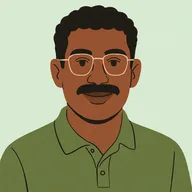
Vivek Raman
Site reliability engineer · 8 years · Chennai
Keeps checkout and payments running for an online grocery. Picks up problems nobody owns and fixes their causes; too ready to carry things alone instead of handing work back or asking for help.

Gurleen Sandhu
Customer success manager · 6 years · Mohali
Looks after forty mid-sized accounts for an HR software company. Keeps every promise she makes to a customer; slower to act on internal problems that sit in another team's area.
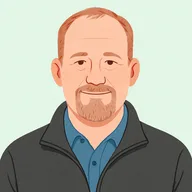
Tyler Reed
Warehouse operations supervisor · 11 years · Columbus, Ohio
Runs the night shift at a 300-person distribution center. Owns his team's results without excuses and walks over to other departments to sort problems out; tends to work around a recurring problem instead of fixing its cause.
Illustrative people. The names are invented, the portraits are AI-generated, and their words were written by our AI writers to show what candidates sound like. Any resemblance to a real person is a coincidence.
The questions
Tell me about a time you took responsibility for a problem that wasn't strictly your job.
Whether the candidate acts on problems outside their remit and follows them through until someone owns them, rather than assuming somebody else will.
Follow up with
- Why did you pick it up instead of passing it on?
- Who should have owned it, and did they end up owning it?
- What did taking it on cost you?
Vivek RamanSite reliability engineer · 8 years · Chennai“We had a nightly job that matched payments against the bank's records, written years ago by someone who'd since left. When it failed, it emailed a mailbox nobody read. I only found out because finance asked why some refunds were three days late. It belonged to the payments team, who were mid-migration, so nobody was watching it. I fixed the alert first, so a failure paged the payments on-call, and reran the three missed nights with finance checking the totals. Then I wrote a page on what the job actually did and took it to the payments lead and my manager so it had a named owner. Payments rebuilt it the next quarter, and I reviewed the rewrite.”
What makes it strong
Spots a gap that was hurting the work, acts without waiting to be asked, limits the immediate harm, brings in the people who should own it, and follows through until it has a named owner or is solved for good.
Gurleen SandhuCustomer success manager · 6 years · Mohali“Some customers' invoices were showing the wrong number of seats. It wasn't really a customer success issue; it's billing's area. I raised it with my manager and logged it in the billing team's queue. I think they're still looking at it, but I make sure my customers know it's been reported.”
What gives it away
Noticed the problem and reported it, then stopped. Or describes doing their own job well and calls it ownership. Cannot say how it ended.
Tell me about a commitment you made that you couldn't keep. What did you do when you realized?
Whether the candidate warns people as soon as a promise is at risk and renegotiates it openly, rather than going quiet or rescuing it through heroics nobody sees.
Follow up with
- How early did you know?
- What did you offer the person instead?
- What did it cost them, and you?
Gurleen SandhuCustomer success manager · 6 years · Mohali“I'd promised a customer, the HR head at a logistics company, that their custom leave policy would be live before their financial year began on April 1. Two weeks out, our implementation lead told me it needed a change engineering couldn't make in time. I called her that afternoon rather than waiting for a perfect plan: it won't be fully live on the 1st; here's what will work, and here's a workaround for the rest, a manual approval step my team would run for her. I gave her a date for the full fix, May 15, and sent a short update every Friday. It went live on May 12. She renewed later that year and mentioned the Friday updates on the call.”
What makes it strong
Tells the person as soon as they know, not at the deadline; is honest about what will and won't happen; offers a workaround and a new date that they then meet; and keeps the person updated until it is done.
Vivek RamanSite reliability engineer · 8 years · Chennai“I'd promised another team a new staging environment by the end of the month, while I was also on call and in the middle of a migration. I didn't want to let them down, so I worked two weekends and got it to them about a week late. I don't like going back on a promise, so I'd rather just push through.”
What gives it away
Said nothing until the deadline had passed, or tried to rescue it alone with late nights and delivered late anyway. The person waiting found out when the date had already gone.
Tell me about a result you were responsible for that came in well below expectations. How did you explain it to your manager?
Whether the candidate answers for a disappointing result openly and first, with their own part in it, rather than explaining it away.
Follow up with
- Did your manager hear it from you before they saw it anywhere else?
- What was your part in it, separate from everyone else's?
- What did you change afterwards?
Tyler ReedWarehouse operations supervisor · 11 years · Columbus, Ohio“Last peak season, my shift's pick accuracy dropped from 99.6 to 98.1 percent over two weeks: a few hundred more wrong orders every night. That was on me. I'd brought on forty seasonal temps and put them straight into the hardest zones to hit our volume. I told my operations manager before she saw the weekly report: here's the number, here's why, here's what I'm doing. We paired every temp with a regular for their first three shifts and moved them to simpler zones, and accuracy was back above 99.4 in eight days. I told her I should have taken a slower week on volume instead of shipping wrong orders, and this year the temps were trained before peak.”
What makes it strong
Raises the result before being asked, gives the number plainly, names their own part in it before anyone else's, says what they are doing about it, and follows up with what changed.
Gurleen SandhuCustomer success manager · 6 years · Mohali“One of my biggest accounts didn't renew last year, about twelve percent of my book. They'd been asking for a custom reporting feature for months, and product never prioritized it, even though I flagged it in every quarterly review. So with the product where it was, there honestly wasn't much more I could have done.”
What gives it away
Explains the result through other teams, the market or the product, with nothing they could have done differently. Their manager found out from a report, not from them.
Tell me about a problem you fixed for good, not just for that day.
Whether the candidate follows a recurring problem past the workaround to its cause, and makes sure it stays fixed.
Follow up with
- How long had people been living with it?
- How did you find the cause?
- How do you know it hasn't come back?
Vivek RamanSite reliability engineer · 8 years · Chennai“Our checkout service ran out of database connections about once a fortnight, always at the evening peak. A restart fixed it, so it had been happening for months. After the third page in one month, I took it on. I added connection metrics per service and found that a reporting job another team ran at 7 p.m. opened connections and never closed them. We fixed the leak with that team, moved the report onto a read replica, and added an alert at 80 percent of the pool so we'd see it coming. It hasn't happened in the eight months since. I also added a line to our on-call runbook: if you restart the same thing twice in a month, open a ticket for the cause.”
What makes it strong
Notices a problem that keeps coming back, stops reapplying the workaround, finds the cause with evidence, fixes it with whoever owns that part, and checks afterwards that it stayed fixed.
Tyler ReedWarehouse operations supervisor · 11 years · Columbus, Ohio“Trucks kept waiting at the dock at the start of my shift because the day shift left the staging lanes full. So I started coming in forty-five minutes early with a couple of my guys to clear them. It works; the trucks go out on time now. That's just how I am. I don't wait for someone else to fix it.”
What gives it away
Describes a workaround they still apply by hand, such as staying late or checking everything themselves. The cause is never touched, or they cannot say why it happens.
You notice a problem in another team's work that will hurt customers in a few weeks. It isn't your job to fix, and that team is busy. What do you do?
Where the candidate draws the line of ownership: whether they act on a problem they don't own through the people who do own it.
Follow up with
- What if they tell you they have no time?
- Would you ever fix it yourself? When?
- At what point would you go to your manager?
Tyler ReedWarehouse operations supervisor · 11 years · Columbus, Ohio“Say receiving is labeling pallets with the wrong bin codes, and in three weeks that'll mean wrong orders on my shift. First I'd pull five or six real examples, so I'm not walking in with a hunch. Then I'd go find their supervisor, face to face, not an email into their queue: here's what I'm seeing, here's what it'll cost us both in three weeks. If they're stretched, I'd offer to lend two of my people for a night to help relabel. Either way, we'd agree a date to check back, and I'd put it in my calendar. If nothing's moved by then, I'd tell them I'm taking it to our managers, and ask them to come with me.”
What makes it strong
Gathers evidence so it isn't a hunch, talks to the owning team directly rather than filing it and moving on, offers practical help, agrees a date to check back, and escalates openly, with the other team aware, if nothing moves.
Vivek RamanSite reliability engineer · 8 years · Chennai“Honestly, I'd probably just fix it myself. I have access to most of our systems, and it's quicker than waiting for their next sprint. I'd let them know afterwards what I'd changed, so they weren't surprised.”
What gives it away
Logs it and leaves it because it isn't their job, or quietly fixes it in the other team's work without telling them, so the owners never learn and nobody owns the fix.
How do you keep track of what you've promised people? Walk me through the last thing you promised someone.
Whether the candidate has a reliable way of following through, shown with a recent example rather than a description of good habits.
Follow up with
- Where is that promise written down right now?
- What happens if you are going to miss it?
- When did something last slip through, and why?
Gurleen SandhuCustomer success manager · 6 years · Mohali“Everything I promise goes into one list the same day, with a date: customer calls, favors for colleagues, all of it. The last one was yesterday. A customer asked whether our attendance module could export to their payroll provider's format, and I said I'd have an answer by Friday. It's on my list for Friday, I've already asked our product specialist, and I'll chase on Thursday if I haven't heard. If the answer is going to be late, the customer hears that from me before Friday, not after. Every Monday morning I go through the list and close or re-date anything that's moved.”
What makes it strong
Writes every commitment down the day it is made, with a date, in one place; describes a specific, recent promise and where it stands; warns people before a date slips; and reviews the list on a regular rhythm.
Tyler ReedWarehouse operations supervisor · 11 years · Columbus, Ohio“I've got a pretty good memory, and if something's important, it gets done. On the floor you're dealing with things as they come up, so I don't really do lists. If somebody needs something from me, they'll usually come and remind me.”
What gives it away
Relies on memory, or on people chasing them. Cannot give a recent example of a specific promise and how it was kept.
Tell me about an outcome you were accountable for where most of the work was done by other people. How did you make sure it happened?
Whether the candidate owns a result through others, making the goal and the owners clear and acting early on slippage, without doing everything themselves.
Follow up with
- How did you know it was on track before the deadline?
- What did you do when something slipped?
- What did you do yourself, and what did you leave to others?
Gurleen SandhuCustomer success manager · 6 years · Mohali“We signed a manufacturer with about two thousand employees, and I was accountable for them running payroll on our system within sixty days. Nearly all the work sat with our implementation team and the customer's IT team. On day one I agreed with the customer what "live" meant: their first full payroll run on our system, signed off by their finance head. Then I ran a fifteen-minute call every Tuesday with the implementation lead and their IT manager: one list of open items, an owner for each. When data migration slipped a week, I took it to my manager that day and got a second engineer for ten days. They ran their first payroll on day fifty-eight, with two corrections we fixed that afternoon.”
What makes it strong
Defines what 'done' means with the people involved, makes clear who owns each piece, checks progress on a regular rhythm, acts early when something slips, and treats the overall result as theirs, not just their own tasks.
Vivek RamanSite reliability engineer · 8 years · Chennai“I'm responsible for our Kubernetes upgrade this quarter, with three other engineers. To be honest, I end up doing the risky parts myself, because it's faster than explaining them and I know the cluster best. The others take the simpler pieces. It means some late nights, but it gets done.”
What gives it away
Did the important parts themselves to be safe, or handed the work off and checked only at the end. Cannot say how they knew it was on track.
Rating the answers
Rate straight after the interview, alone, against these anchors, and write down the line the candidate said that earned the score.
| Rating | What it looks like |
|---|---|
| 5 · Strong | Acts on problems beyond their role, works with the owners rather than around them, follows through to a measurable outcome, owns bad results plainly, fixes causes rather than symptoms, and keeps track of what they have promised. |
| 3 · Mixed | Gives real examples of taking responsibility and following through, mostly within their own job. Owning a bad result, involving the right people or fixing the cause comes out only when prompted. |
| 1 · Weak | Describes tasks done as instructed, waits for someone else to own problems, and explains disappointing results through other people. Cannot give an example of following anything through. |
If you are the candidate
- Choose an example where the problem wasn't clearly yours, and say what made you pick it up. 'Nobody had asked me to' is the line interviewers wait for.
- Follow the story to the outcome: a number, a date, a customer who went live. Stopping at 'I raised it with the team' sounds like handing it off.
- Have one story where something went wrong on your watch, and tell it without blaming anyone. Owning a bad result is the heart of accountability.
- Show where your ownership stopped: who you brought in and how they took it over. Doing everything yourself is not the answer interviewers are after either.
- Freshers: a college fest you ran, a group project you rescued, or a part-time job where you fixed something nobody asked you to all count.
Never ask
- Don't ask 'Are you a responsible person?' or 'Do you take ownership?'. Why: everyone says yes, and you end up rating self-description. Ask for a specific time they did.
- Don't ask how many hours a candidate works, or whether they will stay late and work weekends 'when it matters', as a test of ownership. Why: it rewards stamina over results and screens out people with caregiving duties or health conditions. If the role has on-call or shift work, state the schedule and ask whether it works for them.
- Don't ask whether family commitments would get in the way of following through. Why: it is about family status, not the work; it is usually asked only of women, and family and marital status are protected in many jurisdictions. Ask every candidate the same questions about the work.
- Don't ask about personal debts, loans or credit history as evidence that someone is responsible. Why: several US states and cities restrict credit checks in hiring, it is personal data under India's DPDP Act and the GDPR, and it says nothing about how they work. Ask about commitments they made at work.
Questions people ask
- What does ownership mean in an interview?
- Acting on problems without being told, following the work through to its result rather than stopping at your own task, and answering for that result when it goes badly. Interviewers listen for what you did when nobody had assigned the problem to you.
- How do I answer 'Tell me about a time you took ownership'?
- Pick one situation where something needed doing and it was not clearly your job. Say what you noticed, why you acted, what you did step by step, who you brought in, and how it ended, with a number or a date. Close with what changed afterwards, such as a new owner or a new check.
- Is going beyond your role always a good sign?
- No. Interviewers rate judgment too. Changing another team's system without telling them, or carrying everything alone until you burn out, is ownership without judgment. The strongest answers act quickly and bring the right people in.
- What is the difference between ownership and accountability?
- Ownership is acting on something before you are asked and seeing it through. Accountability is answering for the result, good or bad, once it is yours. A good interview tests both: one question about stepping up, and one about a result that disappointed.
Ask it the same way every time.
Itya puts these questions in every interviewer's guide, records the answers, and drafts a scorecard that quotes the line behind each rating. The AI drafts; your team decides. Free plan, unlimited teammates.