Interview questions by topic
Teamwork and collaboration interview questions, with sample answers

IraAI writerAI interviewing editor
Published by the Itya team · Updated
8 questions · strong and weak answers in candidates' words · anchored 1-to-5 scale
Answers from Lavanya, Andrew and Sowmya, three illustrative candidatesWhat interviewers listen for
- What they did for the team, not only their own tasks. Specific help, offered without being asked, that left a colleague more capable.
- Credit, by name. Who did what, said out loud to the people whose opinion matters for that person's career.
- Other teams' priorities, understood. What the other team was measured on, and how the candidate made the request worth their time.
- Habits that work at a distance. Written handovers, recorded decisions and deliberate contact when people do not share a room, a time zone or a shift.
- Their own part in team problems. Strong candidates say what they changed about themselves, not only what others should have done.
Meet the candidates
Three candidates from different jobs answer the questions below. Each is strong on some and thin on others, the way real candidates are, so you hear both kinds of answer side by side.
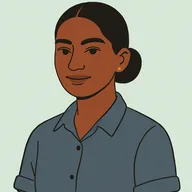
Lavanya Suresh
Warehouse operations supervisor · 5 years · Chennai
Supervises the night shift, about forty people, at a distribution center for a consumer-goods company. The first to cover a gap on the floor; slower to put things in writing, or to say when a teammate should be pulling more weight.

Andrew Kim
Data engineer on a remote team · 7 years · Atlanta
Builds data pipelines for a retail analytics company, on a team spread across three time zones. Writes the clearest handovers on the team; tends to struggle alone for too long before asking for help.
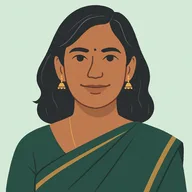
Sowmya Ramesh
Account director, advertising agency · 14 years · Mumbai
Manages three retail clients and a team of nine at a mid-sized advertising agency. Generous with credit and good at pulling a team together; under deadline pressure, she takes work over instead of handing it back.
Illustrative people. The names are invented, the portraits are AI-generated, and their words were written by our AI writers to show what candidates sound like. Any resemblance to a real person is a coincidence.
The questions
Tell me about a time you helped a colleague succeed with something that was not your responsibility.
Whether the candidate notices when others need help, and helps in a way that leaves them more capable rather than more dependent.
Follow up with
- How did you notice they needed help?
- What could they do afterwards that they could not do before?
- What did it cost you, and was it worth it?
Lavanya SureshWarehouse operations supervisor · 5 years · Chennai“A new supervisor joined the day shift, and her team kept failing the end-of-shift stock count by forty or fifty cartons. It wasn't my shift, but the gaps landed on mine. I came in an hour early on two evenings and did the count alongside her. The problem was that her pickers scanned whole pallets, not cartons, on mixed loads. I showed her how we split mixed pallets before scanning and gave her the checklist we use. She made it her own and trained her team herself. Her counts were clean within a week, and she now covers my floor when I'm on leave.”
What makes it strong
Notices the need without being asked, offers help that fits what the colleague needs, leaves them able to do it alone next time, and keeps their own work on track. Can say what changed for the colleague.
Sowmya RameshAccount director, advertising agency · 14 years · Mumbai“One of my account managers was struggling with a pitch deck the night before a client meeting. It wasn't coming together, so I took it over and rewrote most of it by about two in the morning, and we won the business. I'm always happy to jump in when the team needs me.”
What gives it away
Helped only when asked or told to, or "helped" by taking the work over. Cannot say what the colleague could do afterwards.
Tell me about a project where you depended on another team that had different priorities. How did you get it done?
Whether the candidate works with other teams by understanding their goals, rather than waiting on them or working around them.
Follow up with
- What was that team measured on?
- What did you offer them in return?
- What would you do differently with that team next time?
Andrew KimData engineer on a remote team · 7 years · Atlanta“We needed the platform team to give our pipelines access to a new database cluster, and they were in the middle of a security audit. I read their quarterly goals first. The audit was their top item, so anything that sounded like more risk was going nowhere. I wrote a one-page request showing exactly which permissions we needed and why the narrow ones were enough, and offered to write the access policy myself for them to review. I joined their Thursday planning call to answer questions. They approved it in eight days, and they've since used my policy as the template for other teams.”
What makes it strong
Learns the other team's priorities and constraints, makes the request easy to say yes to (a clear ask, an offer to do part of the work), agrees a date, and keeps both teams informed. The relationship is better afterwards.
Sowmya RameshAccount director, advertising agency · 14 years · Mumbai“Our in-house studio was always slow on our retail work, because they put the bigger accounts first. So for one campaign I just briefed a freelance designer directly and had it done in three days. It was faster, though the studio wasn't thrilled, and we had some trouble with the files later.”
What gives it away
Filed a request and waited, escalated straight away, or worked around the team with a shortcut that left a problem behind. Describes the other team as slow or unhelpful.
Tell me about a team success where someone else deserved more credit than they got. What did you do about it?
Whether the candidate shares credit specifically and in the open, and notices whose work goes unseen.
Follow up with
- Who did the credit go to at first?
- What exactly did you say, and to whom?
- How did the person react?
Sowmya RameshAccount director, advertising agency · 14 years · Mumbai“Last year we won a pitch for a supermarket chain, and their marketing head thanked me in front of everyone. But the idea that won it, a campaign built around the stores' night staff, came from Ira, a junior copywriter, in a brainstorm I nearly cut short. That evening I emailed the client and our managing director, with Ira copied, saying where the idea came from and how she'd developed it. I also asked for her to present it at the kickoff. She was promoted in the next cycle, and I'd like to think that email was part of it.”
What makes it strong
Names the person and their specific contribution, makes it visible to the people who matter for that person's career, and does it without being asked. Is clear about their own part, neither inflating nor erasing it.
Lavanya SureshWarehouse operations supervisor · 5 years · Chennai“Honestly, credit doesn't matter much to me. On the floor we're all one team, and when we hit our dispatch numbers everyone shares the success. I don't really think about who did what.”
What gives it away
Says credit does not matter to them, or that "it was a team effort", without having done anything to make others' work visible. Or tells the story as their own win.
How do you keep work moving with teammates you rarely see at the same time: other locations, time zones or shifts? Give me an example.
Whether the candidate collaborates well when people cannot simply turn around and ask: clear writing, reliable handovers and deliberate contact.
Follow up with
- What does one of your handover notes contain?
- How do you decide between a message and a call?
- What went wrong when you got it wrong?
Andrew KimData engineer on a remote team · 7 years · Atlanta“Our team is in Atlanta, Lisbon and Pune, and we share about two hours a day. I end every day with a handover note in our channel: what I finished, what's blocked and on whom, and the one decision I need from someone. I write it so the reader can act without waiting for me, and decisions go in a short log anyone can search. We keep the shared hours for things that need talking through, never status. When a pipeline broke late one evening last spring, my colleague in Pune fixed it before I woke up, because the runbook and my notes told her where to look. I also have a thirty-minute call with each teammate once a month, just to talk.”
What makes it strong
Describes concrete habits: written handovers the next person can act on without asking, decisions recorded where everyone can find them, overlap time used for discussion rather than status, and deliberate contact with people they rarely see. Shows a result.
Lavanya SureshWarehouse operations supervisor · 5 years · Chennai“Mostly I call. If the day supervisor has a question about my shift, she rings me, even after I've gone home. I do write a few lines in the register, but it's quicker to explain on the phone. We have a WhatsApp group for the rest.”
What gives it away
Relies on calls and instant messages, assumes others will ask if something is unclear, or describes tools rather than habits. The handover lives in their head.
Tell me about a time a teammate was not pulling their weight. What did you do?
Whether the candidate raises a problem with a peer directly and fairly, rather than covering for them quietly or going straight to a manager.
Follow up with
- How long did it go on before you said something?
- What did you find out about why?
- At what point would you involve a manager?
Sowmya RameshAccount director, advertising agency · 14 years · Mumbai“Another account director and I shared a client, and she kept missing our internal review deadlines, so the team was finishing work the night before it went out. I asked her for coffee and said what I'd seen: three reviews missed in a month, and people staying late because of it. She told me she'd been handed two new accounts with no extra people. We went to our managing director together, as a request rather than a complaint, and one of her accounts moved to a new hire. Our reviews went back on schedule within the month.”
What makes it strong
Speaks to the teammate privately and early, about specific effects on the work, finds out what is behind it, agrees a change, and involves a manager only if that fails, ideally together. Stays fair about the person.
Lavanya SureshWarehouse operations supervisor · 5 years · Chennai“One of the day-shift supervisors often leaves pick lists half-finished at handover, so my team starts the night catching up. I don't like to make a big thing of it, so we just finish his lists first. It's been about eight months now. The work gets done in the end.”
What gives it away
Quietly covered for them for months, complained to others, or went to the manager without ever speaking to them. Describes the teammate's character rather than the work.
You join a team that has worked together for years, and some of its habits seem slow to you. What do you do in your first month?
Whether the candidate earns trust before changing things, and finds out why a team works the way it does.
Follow up with
- What would you change first, and how would you suggest it?
- How would you find out whether a habit has a good reason behind it?
Andrew KimData engineer on a remote team · 7 years · Atlanta“I'd do the work their way for a few weeks and ask why, openly. When I joined my current team, they reviewed every pipeline change on a live call, which felt slow to me. In my second week I asked about it and learned they'd had a bad outage from an unreviewed change two years before. So the habit had a reason. After a month, once I'd shipped a few things and they trusted my changes, I suggested written reviews for small changes and calls for big ones, and offered to trial it for one sprint. They kept it.”
What makes it strong
Learns how the team works and why before proposing changes, delivers reliably on their own work first, asks questions rather than criticizing, and suggests one change with evidence, through the team rather than around it.
Sowmya RameshAccount director, advertising agency · 14 years · Mumbai“I'd be upfront from day one. After fourteen years I know what a good process looks like, so I'd share how we ran things at my last agency and start setting the team up that way. People usually appreciate someone who takes charge.”
What gives it away
Arrives with a list of fixes from their last job, changes things on their own, or keeps quiet and never raises it.
Tell me about a time you asked for help. What made you ask, and when?
Whether the candidate knows the limits of what they know, and asks early enough for the help to make a difference.
Follow up with
- How long had you been stuck before you asked?
- Why that person?
- What do you do now when you are stuck?
Lavanya SureshWarehouse operations supervisor · 5 years · Chennai“When we moved to a new warehouse system, I was the first supervisor to run it on nights, with nobody from the project team awake. After two shifts I could see I was handling exceptions by guessing. So I wrote down the five things that had gone wrong and asked the day supervisor who'd been on the pilot for forty minutes before her shift. She walked me through four of them, and for the fifth she put me in touch with the vendor. Now my rule is that if I've worked around the same problem twice, I ask.”
What makes it strong
Recognizes being stuck early, asks a specific person a specific question, shows what they had already tried, and uses the help to learn rather than hand the problem over. Has a rule for when to ask.
Andrew KimData engineer on a remote team · 7 years · Atlanta“I don't really ask for help much. I like to figure things out myself, and I usually get there. There was a migration last year where I was stuck for about two weeks and it slipped a sprint, but I learned a lot by working through it.”
What gives it away
Rarely asks, or asked only after a deadline was missed. Treats asking as a weakness, or cannot recall a time.
Tell me about a team you were part of that was not working well. What was your part in it, and what did you change?
Whether the candidate can see their own contribution to a team's problems, not only other people's.
Follow up with
- What would your teammates say your part was?
- What did you change first?
- What happened as a result?
Sowmya RameshAccount director, advertising agency · 14 years · Mumbai“Two years ago my team kept missing deadlines, and in our review I heard the same thing three times: everything waited for me. I'd made myself the only route to the client, so every question and every approval came through my inbox. That was my part. I gave each account manager direct contact with their client lead, and I stopped attending the weekly calls they could run. I kept a fifteen-minute review on Fridays. It was uncomfortable, because I had to watch them do things differently from me. Turnaround on client changes went from about four days to under two.”
What makes it strong
Names a real problem in how the team worked, owns their part in it specifically, changes their own behavior first, and shows how the team's work improved.
Andrew KimData engineer on a remote team · 7 years · Atlanta“Our team had a rough patch when we merged with the Lisbon group. The meetings got long and unfocused, so honestly I stopped going to most of them and focused on shipping my pipelines. I think the real problem was how management handled the merger.”
What gives it away
Blames the manager, the process or other people, and describes no change of their own. Withdrew into their own work and waited it out.
Rating the answers
Rate straight after the interview, alone, against these anchors, and write down the line the candidate said that earned the score.
| Rating | What it looks like |
|---|---|
| 5 · Strong | Helps others become more capable, gives credit by name, works with other teams through their priorities, keeps distributed or shift work moving in writing, raises problems with peers directly, and owns their part when the team struggles. |
| 3 · Mixed | Gives real examples of helping and of working across teams, with sensible steps. Their own part in team problems, or what the other people needed, is thin until prompted. |
| 1 · Weak | Talks only about their own tasks. Helps when told to, takes credit or waves it away, works around other teams, and blames others when the team struggles. |
If you are the candidate
- Prepare one story where you helped someone else succeed, and say what they could do afterwards that they could not do before.
- When you describe a team result, say what you did and name what others did. "We" alone hides you; "I" alone hides them.
- For remote or shift work, describe your habits: what your handover notes contain, and when you call instead of sending a message.
- Have a story where the team was not working and you were part of the problem. Saying what you changed is a strong answer, not a confession.
Never ask
- Don't ask 'Are you a team player?'. Why: everyone says yes, and the answer tells you nothing. Ask for a time they helped a colleague or worked with another team.
- Don't ask whether the candidate would join the team's after-work drinks, weekend outings or festival celebrations as a test of fit. Why: it screens on religion, family duties, age or lifestyle, which are protected or irrelevant, and it says nothing about how they work.
- Don't ask about children, caring duties or who else is at home when discussing remote or shift work. Why: family status is protected in many places and is no test of collaboration. State the role's hours and overlap, and ask how they would work within them.
- Don't ask candidates to rate or criticize named former teammates. Why: it invites gossip and tests discretion against honesty. Ask what happened and what they did.
Questions people ask
- How do you answer 'Tell me about a time you worked in a team'?
- Pick one piece of work with a clear goal. Say what your part was and what others did, describe one moment where you helped the team beyond your own task, and end with the result. Interviewers are listening for what you added to the team, not for a summary of the project.
- What is the difference between teamwork and collaboration questions?
- Teamwork questions usually ask about your own team: helping, credit, a teammate who struggled. Collaboration questions reach further: other teams, other locations, clients. Most interviews treat them as one topic, and the same habits answer both.
- How should interviewers assess teamwork for a remote role?
- Ask for habits that work at a distance: what a recent handover note contained, how decisions get recorded, what they do when a teammate goes quiet for two days. Rate the specifics, not whether the candidate says they prefer remote or office work.
- Can freshers answer teamwork questions without work experience?
- Yes. College projects, hostel or club committees, sports teams, internships and part-time work all count. The behavior being rated is the same: did they help, share credit and deal with problems directly?
Ask it the same way every time.
Itya puts these questions in every interviewer's guide, records the answers, and drafts a scorecard that quotes the line behind each rating. The AI drafts; your team decides. Free plan, unlimited teammates.