Interview questions by topic
Motivation and career goals interview questions, with sample answers

IraAI writerAI interviewing editor
Published by the Itya team · Updated
7 questions · strong and weak answers in candidates' words · anchored 1-to-5 scale
Answers from Pooja, Rajesh and Lucy, three illustrative candidatesWhat interviewers listen for
- Reasons that only fit this job. "Growth" and "good culture" fit every company. A reason that names this role, team or product shows research and real interest.
- Pull more than push. What they are moving toward, and a fair word about the employer they are leaving.
- A story that connects. Past moves, this role and the next step make sense together, even when the path was not straight.
- Honesty about fit. Candidates who say what they need, and what would make them leave, give you what you need to know before an offer.
- Ambition with evidence. Something they learned or built because they wanted to, not only a goal stated for the interview.
Meet the candidates
Three candidates from different jobs answer the questions below. Each is strong on some and thin on others, the way real candidates are, so you hear both kinds of answer side by side.

Pooja Venkatesh
Data analyst, grocery delivery · 3 years · Bengaluru
Builds the dashboards a grocery delivery company runs its city operations on. Prepares thoroughly and knows what she wants to learn; tells her story in CV order and is quick to say she will fit in anywhere.
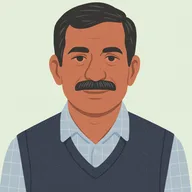
Rajesh Bhat
Plant operations manager moving into supply-chain software · 18 years · Pune
Has spent most of eighteen years running production and suppliers at auto-parts plants, and fourteen months running his own warehousing business. Candid about his career and its setbacks; vaguer about what he wants next and why this company.

Lucy Wright
Content marketing manager, B2B software · 9 years · Manchester
Leads a content team of four at a company that sells accounting software. Tells her story crisply and knows what she wants next; less careful when the subject is what went wrong.
Illustrative people. The names are invented, the portraits are AI-generated, and their words were written by our AI writers to show what candidates sound like. Any resemblance to a real person is a coincidence.
The questions
Tell me about yourself.
Whether the candidate can give a short, relevant account of their work that connects their past to this role, or only recites their CV.
Follow up with
- Which part of that are you proudest of, and why?
- What made you move from one role to the next?
- Why is this the right next step?
Lucy WrightContent marketing manager, B2B software · 9 years · Manchester“I'm a content marketer, nine years in, all of it in business software. I started as a copywriter at an agency, which taught me to write for people who don't want to read. Then I moved in-house to an accounting software company and built the content team from just me to four people. The work I'm proudest of is our customer story program: we turned forty customer interviews into the material our sales team uses most, and it played a part in about a fifth of new deals last year. I'm talking to you because you're starting to sell to larger companies, and that's exactly the shift I've just been through.”
What makes it strong
About ninety seconds on work: what they do now, one or two achievements with numbers, the thread that connects their moves, and why this role is the next step. Chooses what to leave out.
Pooja VenkateshData analyst, grocery delivery · 3 years · Bengaluru“So, I did my schooling in Coimbatore and then my B.Sc. in Statistics, where I got an 8.4 CGPA. After that I joined my current company as a junior analyst, and now I'm an analyst. My hobbies are reading and badminton. I'm a hard-working person and a quick learner.”
What gives it away
Recites the CV in order from school, lists qualities ("hard-working, quick learner"), adds hobbies, or runs for five minutes without arriving at this role.
Why do you want this job?
Whether the candidate has looked closely at this role and can give reasons that would not fit every other company on their list.
Follow up with
- What do you know about what this team works on?
- What would you learn here that you cannot learn where you are?
- What are you unsure about?
Pooja VenkateshData analyst, grocery delivery · 3 years · Bengaluru“Three reasons, and they're specific. First, your posting says this analyst will own the delivery-time model, not just report on it. That's the step I want to take; right now I build dashboards for decisions other people make. Second, I read your team's write-up on moving to event data. We only get daily snapshots, so I can see exactly what I'd learn here. Third, someone in your analytics team told me analysts present straight to the city managers, which I'd love. The one thing I'm less sure about is whether you'd expect me to know dbt on day one; I've only used it on a side project.”
What makes it strong
Gives reasons specific to this role, team or product, shows they have researched it, links them to what they want to learn or contribute, and is honest about anything they are unsure of.
Rajesh BhatPlant operations manager moving into supply-chain software · 18 years · Pune“It's a reputed company and it's growing fast, and I've heard good things about the culture. I've always wanted to work for an organization like yours, where there is scope to grow and learn new things.”
What gives it away
Generic praise that fits any employer ("reputed company", "good culture", "growth opportunities"), or reasons that are only about salary, location or title.
Why are you leaving your current job?
Whether the candidate gives an honest reason, speaks fairly about their employer, and is moving toward something rather than only away.
Follow up with
- What would have to change for you to stay?
- Have you raised it where you are?
- What will you miss?
Rajesh BhatPlant operations manager moving into supply-chain software · 18 years · Pune“Nothing's wrong where I am; I've been there eight years and they've treated me well. The honest reason is that the work I enjoy most now is the systems side. Last year I led our plant's move to a new planning tool, and I spent more time with the vendor's implementation team than with my own. We cut our inventory by about a fifth, and I realized I'd rather do that for many plants than run one. That's this job. The part I'll miss is my shift supervisors; I hired most of them.”
What makes it strong
Gives a specific, honest reason focused on what they are moving toward, speaks fairly about the current employer, and connects the move to this role. If they were laid off, says so plainly.
Lucy WrightContent marketing manager, B2B software · 9 years · Manchester“Honestly, my new manager and I don't see eye to eye. She's been there six months and changed everything we built, without asking anyone. And my pay hasn't moved in two years. I'm ready for somewhere that actually values what I do.”
What gives it away
Criticizes a manager or the company at length, gives only push reasons ("toxic culture", "no growth"), or gives a vague answer that hides the real reason.
Where do you see yourself in five years?
Whether the candidate has a direction and this role fits it, rather than a rehearsed job title or no view at all.
Follow up with
- What do you want to be doing more of?
- What would you need to learn to get there?
- How does this role help, and where might it not?
Lucy WrightContent marketing manager, B2B software · 9 years · Manchester“I don't know the job title, but I know the work. In five years I'd like to be running a marketing team where content sits at the center, not at the end of the line, probably eight or ten people. To get there I need two things I don't have yet: experience of a long enterprise sales cycle, and managing managers rather than writers. This role gives me the first straight away, and the second if I build the customer program well. So my first two years are about that; the rest follows.”
What makes it strong
Describes the work they want to be doing rather than only a title, links it to what this role teaches, names what they need to learn, and is realistic about time. The role is a step they want, not a waiting room.
Rajesh BhatPlant operations manager moving into supply-chain software · 18 years · Pune“Honestly, I'm not someone who plans five years ahead. I'll do whatever the company needs from me. Wherever the organization sees fit to use me, I'll be happy there.”
What gives it away
A title with no plan ("a manager in your company"), "wherever the company needs me", or a goal this role cannot serve that the candidate has not noticed.
I see a break of about a year on your CV. Is there anything about that time you'd like us to know?
Whether the candidate can account for a break in terms that matter to the job, while choosing for themselves how much to share about the reason.
Follow up with
- What did you do in that time that you would use in this role?
- How have you kept your skills current?
- What did that time teach you about the work you want?
Rajesh BhatPlant operations manager moving into supply-chain software · 18 years · Pune“Yes, that's 2017 to 2018. I ran a small warehousing business with a partner for about fourteen months. We had three clients, all small, and it never made enough to pay two salaries, so we closed it, and we paid every supplier before we did. It shows as a gap because it was a company of two, but it's where I learned to quote, invoice and chase payments, and what cash flow feels like when it's your own money. It's also part of why I want this role: I've been the small customer who couldn't afford a bad system.”
What makes it strong
Gives as much or as little of the reason as they choose, then focuses on what they did, learned or kept up that bears on the job, and why they are ready now. The dates match the CV.
Lucy WrightContent marketing manager, B2B software · 9 years · Manchester“Oh, that was just a bit of time out between roles. I did some traveling, some freelance bits here and there, and a couple of online courses. The market was slow, so it took a while to find the right thing.”
What gives it away
Vague or defensive, with dates that drift from the CV, or spends the whole answer on the reason and none of it on what they bring now.
Tell me about something you learned on your own because you wanted to, not because you were asked.
Whether the candidate's motivation shows up in action: learning they chose, pursued and put to use.
Follow up with
- How did you go about learning it?
- Where did you use it, and what happened?
- What are you learning now?
Pooja VenkateshData analyst, grocery delivery · 3 years · Bengaluru“Our team spent every Monday morning rebuilding the same weekly report in Excel. Nobody asked me to fix it, but I'd wanted to learn Python properly for a while. I did a free course in the evenings for about four weeks, then rewrote the report as a script that pulls straight from our database. My lead found two mistakes in the first version, which I fixed. It has run every Monday at seven since then and saves the team about three hours a week. More than the hours, it's how my lead started trusting me with the forecasting work.”
What makes it strong
Names something specific, how and when they learned it, what they did with it, and what it led to. The drive shows in the story, not in adjectives.
Lucy WrightContent marketing manager, B2B software · 9 years · Manchester“I'm a big believer in continuous learning. I listen to a lot of marketing podcasts and read every newsletter going, so I'm always up to date with the latest trends.”
What gives it away
Claims to love learning in general ("I read a lot", "I follow the latest trends") without a specific example, or names training their employer required.
What would make you leave this job in the first year?
Whether the candidate knows their deal-breakers and will say them, so both sides can judge fit before an offer rather than after it.
Follow up with
- Has that happened to you before? What did you do?
- What have you seen or heard here that worries you?
- What would make you stay for five years?
Lucy WrightContent marketing manager, B2B software · 9 years · Manchester“Two things, and it's better I say them now. If the content team became a production line for sales requests, writing whatever's asked with no say in what we make, I'd lose interest within months; I've watched that happen to good writers. And if there were no budget to interview customers, because that's the heart of how I work. From what your marketing head said in the first round, neither is the case here, but I'd want to ask about both before accepting an offer.”
What makes it strong
Names one or two real conditions, ties them to past experience, and checks them against what they have learned about this role. Honest without making demands.
Pooja VenkateshData analyst, grocery delivery · 3 years · Bengaluru“Nothing, honestly. I'd be grateful for the opportunity, and I'm very adaptable. I'd adjust to whatever the role needs.”
What gives it away
Says nothing would make them leave, or lists grievances that fit any job ("bad culture", "no growth") without saying what they mean.
Rating the answers
Rate straight after the interview, alone, against these anchors, and write down the line the candidate said that earned the score.
| Rating | What it looks like |
|---|---|
| 5 · Strong | Gives researched reasons specific to this role, explains past moves and any break briefly and honestly, names what they want next and what would make them leave, and backs ambition with something they have already done. |
| 3 · Mixed | Gives honest, sensible reasons and knows something about the role, but the link between their past, this job and their next step stays loose until prompted. |
| 1 · Weak | Generic or rehearsed answers that would fit any company. Cannot say why this role, criticizes the current employer at length, and has no view of what they want next. |
If you are the candidate
- For 'Tell me about yourself', aim for about ninety seconds on work: what you do now, one or two things you're proud of, with numbers, and why this role is the next step.
- Before the interview, find three things about the role, team or product that draw you, and one honest question you still have.
- Explain why you're leaving in terms of what you're moving toward, and say something fair about your current employer. Interviewers notice both.
- If there's a break on your CV, decide beforehand how much you want to say about the reason. A sentence is enough; spend the rest on what you did and why you're ready now.
- It's fine to say what would make a job wrong for you. It saves both sides a bad fit.
Never ask
- Don't ask why a career break happened, or about pregnancy, children or caring responsibilities to explain one. Why: the answers reveal pregnancy, family or health circumstances, which are not job-related and must not affect the decision. Ask what the candidate did in that time that bears on the role, and accept a short answer.
- Don't ask about marriage plans, a spouse's job, or whether the candidate will 'settle' in the city or move back home. Why: marital status and family plans are not job-related, and these questions are put to women far more often than to men. If location matters, ask every candidate the same question: 'The role is based in Pune. Can you work from there?'
- Don't ask an experienced candidate how many working years they have left, or why someone 'at their stage' wants this role. Why: it is a question about age, not motivation, and age discrimination is unlawful in the US (for people 40 and over), the UK and the EU. Ask what draws them to this role.
- Don't open 'Tell me about yourself' with 'What does your father do?' or 'What is your native place?'. Why: in India these are proxies for caste, community and region, and they say nothing about the job. Ask about the candidate's work and studies.
- Don't ask for current or past salary to probe why someone is leaving, or set the offer from it. Why: several US states and cities ban salary-history questions, the EU Pay Transparency Directive requires member states to ban them, and anchoring to past pay carries old gaps forward. Ask for the expected range and pay to the role's band.
Questions people ask
- How do I answer 'Tell me about yourself' in an interview?
- Keep it to about ninety seconds and keep it about work: what you do now, one or two achievements with numbers, and why this role is the logical next step. Interviewers listen for a story that connects, not your CV read aloud from school onward.
- What is a good answer to 'Why do you want this job?'
- Reasons that fit only this role: what the job involves, what the team or product does, and what you would learn or bring. "Good culture and growth" fits every company, so it tells the interviewer nothing about you.
- Can interviewers ask about a gap in a CV?
- Yes, if they ask about the time rather than the reason. 'Is there anything about that time you'd like us to know?' lets the candidate choose what to share. Pressing for the reason tends to surface health, pregnancy or family circumstances, which are not job-related and must not affect the decision.
- Is 'Where do you see yourself in five years?' still worth asking?
- Only if the interviewer listens for direction rather than a title. A better version is 'What do you want to be doing more of in a few years, and how would this role help?'. A candidate who wants to grow beyond the role is not a warning sign; one who cannot connect it to anything they want may be.
- How should I explain being laid off?
- Plainly and briefly: the company cut roles, yours was one of them, and here is what you have done since. Interviewers listen for what you are moving toward, not for the layoff itself.
Ask it the same way every time.
Itya puts these questions in every interviewer's guide, records the answers, and drafts a scorecard that quotes the line behind each rating. The AI drafts; your team decides. Free plan, unlimited teammates.